
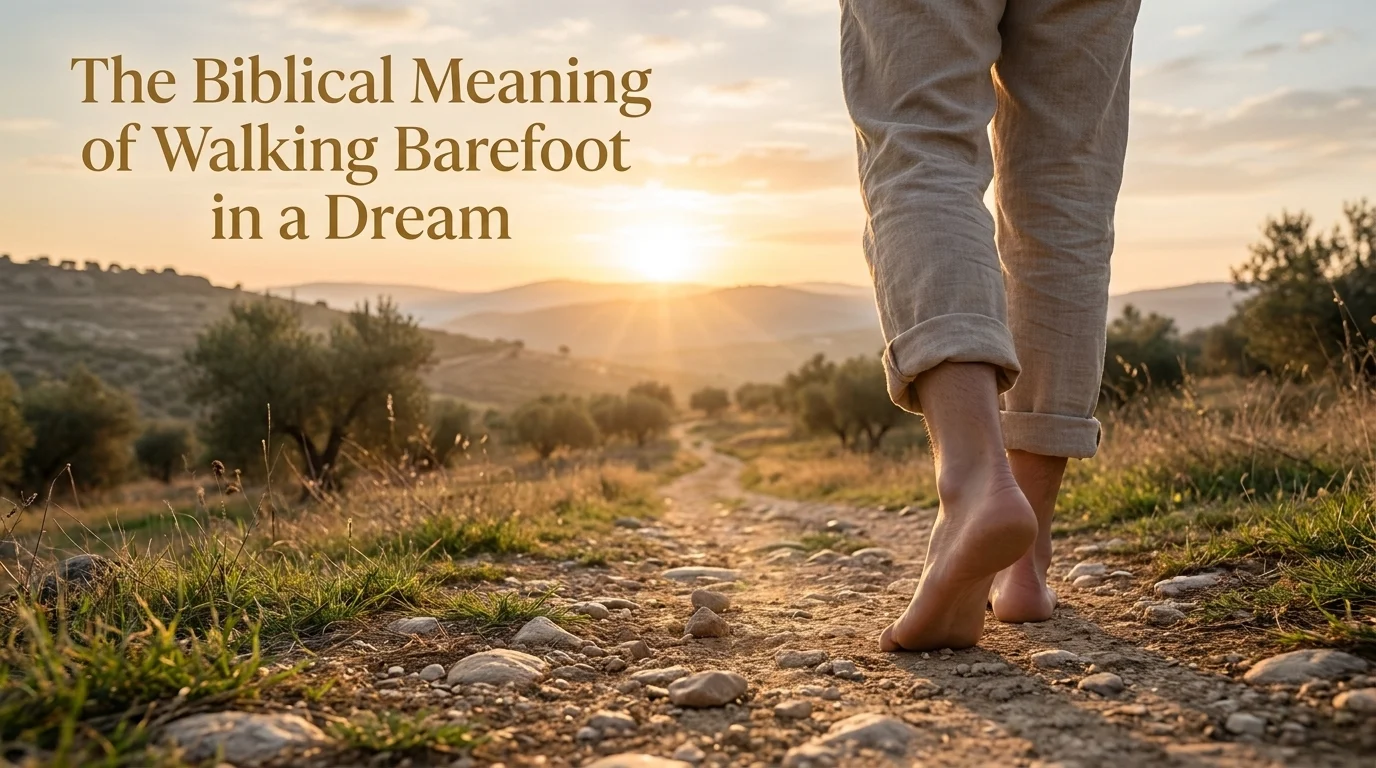
The biblical meaning of walking barefoot in a dream can feel deeply personal, especially when the dream leaves behind a strong sense of peace, fear, humility, or spiritual curiosity. In Scripture, bare feet can carry important meanings connected with holiness, humility, mourning, surrender, and a person’s relationship with God. Because of this, many Christians wonder whether dreaming of walking barefoot has a spiritual message.
Yet the Bible does not give one fixed meaning for every dream about bare feet. The meaning may depend on the setting, your emotions, where you were walking, and what happened during the dream. Biblical dream interpretation should therefore be approached with prayer and wisdom rather than fear.
This guide explores the biblical symbolism of walking barefoot in a dream and the lessons Christians can draw from related passages in Scripture. 📖
Quick Answer:

Walking barefoot in a dream may symbolize humility, vulnerability, spiritual surrender, holiness, hardship, mourning, or a call to walk more closely with God.
The meaning depends heavily on the dream’s context.
For example:
- Walking barefoot on holy ground may suggest reverence and God’s presence.
- Walking barefoot peacefully may point toward humility and surrender.
- Walking barefoot on rough ground may represent hardship or a difficult spiritual journey.
- Losing your shoes may symbolize feeling unprepared, exposed, or vulnerable.
- Walking barefoot toward a safe place may represent faith and dependence on God.
- Dirty or painful feet may suggest spiritual weariness or the need for renewal.
- Bare feet in a joyful setting may represent freedom, simplicity, or release from burdens.
These are possible biblical themes, not guaranteed predictions. The safest approach is to compare the dream with Scripture and pray for wisdom. 🙏
Key Takeaways
- Bare feet have several meanings in biblical stories.
- Moses was told to remove his sandals because he stood on holy ground.
- Bare feet can also appear in contexts of humility, grief, and hardship.
- A dream should not automatically be treated as a prophecy.
- Your emotions and the dream’s setting can change its possible meaning.
- Scripture should remain the foundation for Christian spiritual discernment.
- The central message may be about how you are walking with God, not simply about your feet.
What Is the Biblical Meaning of Walking Barefoot in a Dream?
The biblical meaning of walking barefoot in a dream is closely connected with several themes found throughout Scripture. Bare feet can represent humility, holiness, vulnerability, surrender, mourning, or difficult circumstances.
One of the strongest biblical examples appears in the story of Moses. When Moses approached the burning bush, God told him to remove his sandals because the ground where he stood was holy. This makes bare feet a powerful biblical picture of reverence before God’s presence.
At other times, going barefoot was associated with sorrow or humiliation. King David walked barefoot when he fled Jerusalem during Absalom’s rebellion. The prophet Isaiah also walked barefoot as part of a symbolic message to the people.
This shows why it is difficult to assign one simple definition to a barefoot dream.
If you dream about walking barefoot, the key question is not only, “What do bare feet mean?” You should also ask, “Where was I walking, how did I feel, and what was happening around me?”
A peaceful barefoot walk may suggest humility and freedom. A painful walk may point toward hardship. Standing barefoot in a sacred place may remind you of reverence and God’s presence.
The dream may also reflect ordinary emotions or experiences rather than a supernatural message. Christians can examine such dreams carefully without allowing fear to control their decisions.
Origin, Hebrew and Greek Roots & Etymology of Bare Feet
The Bible was primarily written in Hebrew and Greek, and understanding the language behind biblical references can add depth to the symbolism of feet and sandals.
In the Old Testament, the Hebrew word regel commonly refers to a foot or feet. The concept of walking is also important throughout Hebrew Scripture. Walking often describes more than physical movement. It can describe a person’s way of life, conduct, or relationship with God.
This makes the image of walking especially meaningful.
The Bible repeatedly speaks about people “walking” in God’s ways. In this sense, walking can represent daily obedience. Therefore, a dream about walking barefoot may naturally bring to mind the broader biblical idea of how a person is walking through life.
Sandals also had practical and cultural importance in biblical times. People commonly wore them while traveling, working, and moving across dusty or rough roads. Removing sandals therefore changed a person’s physical condition and could also become a meaningful symbolic act.
The New Testament, written in Greek, continues to use feet and walking as important images. Jesus washed His disciples’ feet, turning an ordinary physical act into a lesson about humility and service.
So the biblical symbolism of bare feet does not come from one special Hebrew or Greek word meaning “barefoot dream.” Instead, it develops from several biblical themes involving feet, walking, sandals, holiness, humility, and human vulnerability.
That distinction matters. Scripture gives us symbolic patterns, but it does not provide a dictionary that assigns one spiritual meaning to every dream.
Walking Barefoot in the Bible: Verses, Passages & Key Stories
Several biblical stories help explain why bare feet can carry spiritual significance.
Moses and the Holy Ground
In Exodus 3:5, God told Moses to remove his sandals because he was standing on holy ground. This is perhaps the clearest biblical connection between bare feet and sacred space.
The important lesson is not that being barefoot is automatically holy. Rather, removing the sandals represented reverence in the presence of God.
David’s Humiliation and Grief
In 2 Samuel 15:30, David went up the Mount of Olives while weeping and walking barefoot. His bare feet appeared in a painful period of personal loss, betrayal, and crisis.
Here, barefoot walking is connected with sorrow and humility.
Isaiah’s Symbolic Act
Isaiah 20 describes the prophet walking barefoot as part of a symbolic message. His unusual appearance represented coming judgment and captivity.
This passage reminds us that barefoot imagery can sometimes communicate vulnerability, humiliation, or difficult circumstances.
Jesus Washing Feet
In John 13, Jesus washed His disciples’ feet. Although the passage is not about walking barefoot in a dream, it provides another important biblical theme connected with feet: humble service.
Together, these passages show that bare feet can carry different meanings depending on context.
They may point toward reverence, grief, vulnerability, humility, service, or hardship.
Spiritual & Prophetic Meaning of Walking Barefoot in a Dream
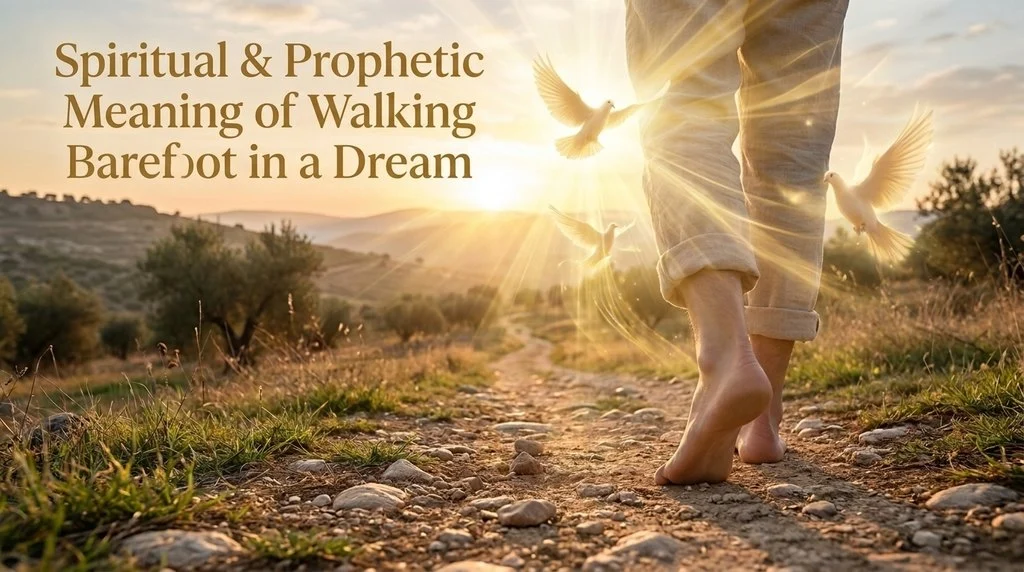
Some Christians wonder whether walking barefoot in a dream has a prophetic meaning. The Bible does show that God sometimes used dreams and visions to communicate with people. Joseph, Daniel, and others received significant dreams or visions in Scripture.
However, this does not mean every modern dream is a prophecy.
A barefoot dream may have spiritual value without being a prediction of the future.
For example, the dream could encourage you to become more humble. It might remind you that spiritual growth requires dependence on God. It could also bring attention to an area where you feel exposed or unprepared.
The idea of “walking” is especially important. Scripture often uses walking as a picture of one’s life with God. Galatians 5:16 encourages believers to walk by the Spirit, while Micah 6:8 calls God’s people to walk humbly with Him.
Therefore, a barefoot walking dream could prompt a useful spiritual question:
How am I walking with God right now?
Are you walking in obedience? Best Are you relying on your own strength? Are you going through a difficult season? Do you need to slow down and listen?
These questions are more spiritually useful than trying to predict an exact future event.
If a dream feels unusually significant, pray for wisdom and compare its message with Scripture. A genuine spiritual impression should never be used to justify behavior that conflicts with biblical teaching.
Personality Traits & Characteristics Associated With Barefoot Symbolism
Walking barefoot in a dream can sometimes reflect qualities or inner experiences rather than external events.
One possible theme is humility. Bare feet remove the protection and status represented by shoes. In biblical symbolism, this can remind a person that human strength and position are limited.
Another possible theme is vulnerability. Shoes protect the feet from stones, heat, cold, and rough surfaces. Without them, a person becomes more exposed to the environment. A dream of walking barefoot may therefore reflect a season when you feel emotionally or spiritually unprotected.
Bare feet may also suggest simplicity. Walking without shoes can create an image of returning to basic things and leaving unnecessary burdens behind.
There can also be a theme of courage. If you are walking barefoot without fear, the dream may reflect your willingness to continue despite discomfort or uncertainty.
Some dreams may highlight sensitivity. Feet are vulnerable when they have no protection. A barefoot dream could represent heightened awareness of what is happening around you.
Still, these should not be treated as fixed personality traits. Dream imagery can come from personal memories, emotions, recent experiences, or spiritual reflection.
Instead of saying, “This dream proves I am a certain type of person,” it is better to ask, “What part of my current life does this image seem to reflect?”
That approach allows room for honest self-reflection and biblical wisdom.
Symbolism & Hidden Spiritual Messages of Walking Barefoot
Barefoot walking can contain several layers of symbolism.
Humility
Bare feet can remind us to approach God with humility rather than pride. Moses’ experience near the burning bush strongly supports this theme.
Holiness
The story of Moses shows that bare feet can become associated with sacred ground. The deeper lesson is awareness of God’s presence.
Vulnerability
Without shoes, the feet are exposed. This can symbolize emotional openness, weakness, or a season when you feel unprotected.
Hardship
Walking barefoot over rocks, dirt, or hot ground can represent discomfort. Spiritually, it may remind you of perseverance during trials.
Surrender
Removing shoes can also create an image of letting go. In a dream, this may represent releasing control and learning to trust God.
Simplicity
Barefoot walking can suggest a return to what truly matters. It may symbolize leaving behind distractions and focusing on faith.
A New Direction
Because walking represents movement, the dream may invite you to think about your current path. You may be entering a new season that requires courage and dependence on God.
The “hidden message” should not be treated as secret information that only a dream interpreter can unlock. Scripture encourages believers to seek wisdom, pray, and test spiritual impressions carefully.
Walking Barefoot in a Dream: Biblical Interpretation
The details of the dream can greatly change its possible interpretation.
Dreaming of Walking Barefoot on Grass
Grass is softer than stone or pavement. Walking barefoot on green grass may symbolize peace, simplicity, rest, or closeness to creation.
If the dream felt peaceful, it may reflect a desire for rest and a simpler spiritual life.
Walking Barefoot on Rough Ground
If your feet hurt while walking, the dream may reflect hardship, emotional strain, or a difficult season.
It does not necessarily mean something bad will happen. It may simply reflect what you are already experiencing.
Walking Barefoot on Holy Ground
This is one of the strongest biblical associations because of Moses.
Such a dream may encourage reverence, humility, and awareness of God’s presence.
Walking Barefoot in Mud
Mud can symbolize messiness, difficulty, or feeling stuck. Spiritually, the dream might encourage you to examine areas of life that need cleansing or better direction.
Walking Barefoot in Water
Water has many biblical associations, including cleansing, renewal, danger, and spiritual life. If the water is calm, the dream may feel peaceful. If it is violent or frightening, the emotional context becomes important.
Barefoot and Unable to Find Shoes
This may symbolize vulnerability or feeling unprepared.
You may be facing something in life where you feel you lack the tools, confidence, or support you need.
Walking Barefoot Without Fear
This can suggest confidence, freedom, simplicity, or surrender. The absence of fear is an important detail.
Barefoot and Injured
Painful feet may represent exhaustion, difficulty, or feeling wounded along your current path.
Again, the dream should be viewed as an invitation to reflect rather than an automatic prediction.
Name Derivatives, Variations & Translations Across Languages
Unlike a personal name, “walking barefoot” is a phrase rather than a biblical name with established derivatives. Still, the concept appears through different words and expressions in biblical translations.
English Bibles may use expressions such as barefoot, barefooted, or phrases describing someone walking without sandals.
The underlying biblical imagery can also involve related terms such as:
- Foot or feet
- Walking
- Sandals
- Removing sandals
- Going barefoot
- Washing feet
- Dust from the feet
These expressions are important because biblical symbolism often depends on the relationship between words rather than on one isolated term.
For example, feet can represent movement, direction, or daily conduct. Walking can represent one’s manner of life. Sandals can represent protection and ordinary travel. Removing sandals can become an act of reverence.
This broader word family helps explain why barefoot dreams can feel spiritually meaningful.
However, Christians should be cautious about assigning a hidden meaning to every translation difference. A translation may use slightly different wording while communicating the same basic idea.
The strongest way to understand the symbolism is to examine the original biblical story, its historical setting, and the larger message of the passage.
That method provides more reliable insight than relying on dream dictionaries that give one universal definition to every symbol.
Cultural & Historical Impact of Barefoot Symbolism

In biblical cultures, feet were much more exposed to dirt and hardship than they are for many people today. Roads could be dusty, rocky, muddy, or hot. Sandals provided basic protection.
Because feet became dirty through ordinary travel, foot washing was an important act of hospitality.
This cultural background helps us understand the humility of Jesus washing His disciples’ feet. The action was not merely about cleanliness. It was a powerful reversal of social expectations. The Teacher served His followers.
Going barefoot could also communicate grief, humiliation, poverty, captivity, or symbolic action, depending on the situation.
This historical background is important when interpreting dreams.
Modern people may associate bare feet with relaxation, beaches, childhood, freedom, or comfort. Biblical audiences could have associated them with very different experiences.
That does not mean a modern dream must carry an ancient meaning. Personal associations still matter.
For one person, barefoot walking may feel peaceful. Best For another, it may represent embarrassment. For someone else, it may remind them of a childhood memory.
Christian dream interpretation should therefore consider both biblical symbolism and personal context.
The Bible gives us the spiritual framework, while the details of the dream may reveal why a particular image appeared.
Why Is Walking Barefoot a Meaningful Spiritual Symbol?
Walking barefoot remains a powerful spiritual image because it combines two ideas: movement and exposure.
Walking means you are going somewhere. Being barefoot means you are not fully protected from the ground beneath you.
Together, these ideas create a picture of a person moving forward while depending on something greater than personal comfort.
This can connect with the Christian journey.
Faith does not promise that every road will be smooth. Scripture openly discusses trials, uncertainty, suffering, patience, and perseverance. Yet believers are repeatedly encouraged to continue walking with God.
A barefoot dream may therefore become a personal reminder to examine your spiritual journey.
Are you rushing?
You trying to control everything?
Are you carrying burdens that God has asked you to surrender?
You walking in a direction that agrees with Scripture?
These questions can be more valuable than searching for a dramatic prediction.
The symbolism may also encourage simplicity. Modern life can become noisy and crowded with responsibilities. Barefoot imagery can remind a person to slow down and return to prayer, Scripture, gratitude, and trust.
The dream’s emotional tone matters too. Peace, fear, sadness, joy, pain, and confusion may all point toward different areas of reflection.
The goal is not to become obsessed with symbols. The goal is to grow closer to God.
Lessons We Can Learn From Barefoot Imagery in Scripture
Barefoot imagery teaches several valuable spiritual lessons.
1. Approach God With Humility
Moses’ encounter with God reminds us that God’s presence deserves reverence. Faith is not about treating holy things casually.
2. Remember That the Spiritual Journey Can Be Difficult
David’s barefoot journey happened during a painful crisis. His story reminds us that faith does not remove every hardship.
3. Stay Dependent on God
Bare feet create an image of vulnerability. Spiritually, vulnerability can become an opportunity to trust God instead of relying only on ourselves.
4. Serve Others Humbly
Jesus washing His disciples’ feet teaches that greatness in God’s kingdom is connected with humble service.
5. Pay Attention to Your Direction
Biblical language frequently uses walking as an image of one’s way of life. Your direction matters.
6. Do Not Fear Every Unusual Dream
Not every dream needs a supernatural explanation. Some dreams may come from memories, emotions, stress, or ordinary mental processing.
7. Test Spiritual Impressions
If a dream seems meaningful, compare what you think it means with Scripture. Never let a dream override clear biblical teaching.
8. Pray for Wisdom
James 1:5 encourages believers to ask God for wisdom. Prayer is a better response to uncertainty than fear.
The deepest lesson may be simple:
Pay attention to how you are walking, whom you are trusting, and where God is leading you.
How to Respond After Having a Barefoot Dream
If you wake up from a vivid barefoot dream, you do not need to panic or immediately search for a dramatic prediction.
Start by remembering the details.
Where were you?
Who was with you?
Were your feet comfortable or painful?
*Were you afraid or peaceful?
Were you trying to reach somewhere?
Did you lose your shoes?
Was there water, mud, grass, stone, sand, or another surface?
Most importantly, ask what the dream brought to the surface emotionally.
Then pray.
You might say:
“Lord, if there is something I need to learn from this dream, give me wisdom and help me understand it according to Your Word. Help me walk faithfully, humbly, and courageously. Guide my steps and protect me from confusion. Amen.”
You can also write the dream down and revisit it later. Sometimes its emotional meaning becomes clearer with time.
Do not make major life decisions solely because of a dream. Scripture, wise counsel, prayer, and sound judgment should remain central.
A dream can become a prompt for reflection without becoming a command.
FAQs:
What does walking barefoot in a dream mean biblically?
It can symbolize humility, vulnerability, holiness, hardship, surrender, or spiritual dependence. The exact meaning depends on the dream’s setting, emotions, and details.
Is walking barefoot in a dream a sign from God?
Not necessarily. The Bible records dreams that carried divine messages, but it does not teach that every dream is a message from God. Dreams should be tested carefully against Scripture.
What does it mean to dream of walking barefoot on holy ground?
Because Moses removed his sandals when standing on holy ground, such a dream may symbolize reverence, humility, or awareness of God’s presence. It should not automatically be treated as a prophecy.
What does it mean to dream about painful barefoot walking?
Painful barefoot walking may represent hardship, emotional strain, vulnerability, or spiritual weariness. Consider what difficult circumstances you are currently facing.
What does losing shoes in a dream mean biblically?
Losing shoes may symbolize vulnerability, feeling unprepared, uncertainty, or a change in direction. Biblical symbolism can provide helpful themes, but there is no single biblical rule that gives this dream one fixed meaning.
Does barefoot walking symbolize humility in the Bible?
Yes, humility is one possible biblical theme. Moses’ encounter with God and several other passages connect bare feet with situations involving reverence, weakness, grief, or humility.
What does walking barefoot in water mean spiritually?
The meaning depends on the water and your emotions. Calm water may suggest peace or renewal, while dangerous water may reflect fear or difficulty. Biblical water symbolism includes several different themes.
Should Christians use dream dictionaries?
Dream dictionaries can offer ideas, but they should not be treated as authoritative biblical sources. Scripture and prayer should provide the foundation for Christian discernment.
Can a barefoot dream predict the future?
A dream should not automatically be considered a prediction. Even when Scripture records prophetic dreams, Christians should avoid assuming that every modern dream has prophetic meaning.
Conclusion:
The biblical meaning of walking barefoot in a dream can point toward several meaningful spiritual themes, including humility, vulnerability, reverence, surrender, hardship, and dependence on God. Scripture shows that bare feet appeared in moments of holiness, grief, symbolic action, and humble service.
Still, there is no single biblical formula that explains every barefoot dream. The setting, emotions, personal circumstances, and details all matter. Most importantly, a dream should never replace Scripture or become a source of fear.
If you have experienced this dream, let it encourage thoughtful reflection rather than anxiety. Ask God for wisdom, examine your spiritual path, and consider whether you are walking with Him in humility and trust.
Sometimes the most meaningful question is not, “What will happen next?” but “How am I walking with God today?” 🙏

I’m Chris Robert, a writer at NameFluxo who explores the deeper meanings behind biblical names, words, dreams, and spiritual symbols. I enjoy turning Bible-based insights into clear, simple, and meaningful articles that help readers understand their faith and Scripture better.