
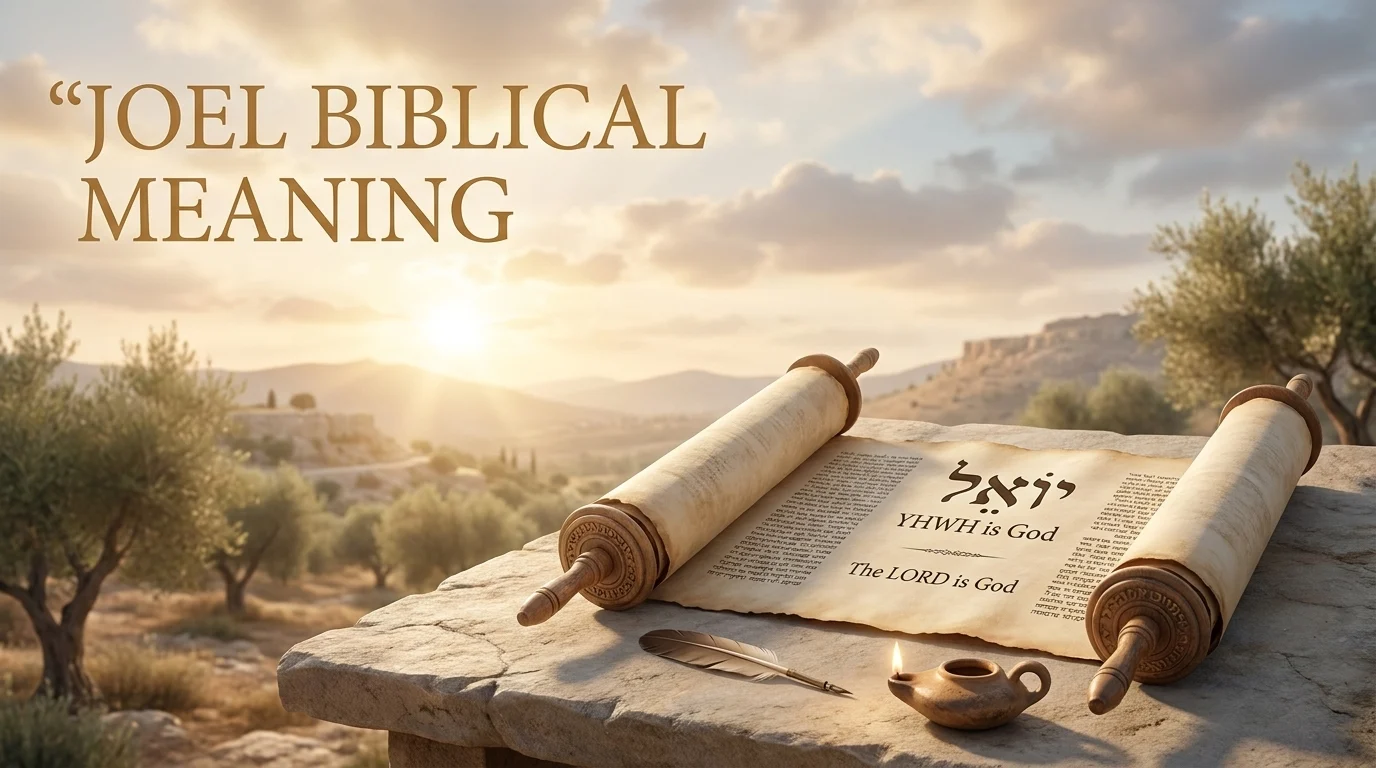
The name Joel has a simple but powerful meaning: “the Lord is God” or “Yahweh is God.” It comes from the Hebrew name Yo’el and combines a form of the divine name for the Lord with El, a Hebrew word for God.
Joel is also the name of the prophet whose message is recorded in the Book of Joel, one of the Minor Prophets in the Old Testament. His book begins with a devastating locust plague and drought, but its message reaches far beyond agriculture. Joel calls God’s people to return to Him, speaks about restoration, announces the coming Day of the Lord, and points toward the outpouring of God’s Spirit.
For Christians, the name Joel can therefore carry more than a definition. It is a short confession of faith: the Lord is God. The prophet’s message also reminds believers that difficult seasons should lead them toward repentance, prayer, dependence on God, and hope in His restoration.
Quick Answer:

The Joel biblical meaning is “the Lord is God” or “Yahweh is God.” The name comes from the Hebrew Yo’el.
Joel was also the name of an Old Testament prophet who called Judah to repentance during a devastating crisis and proclaimed God’s promise of restoration and the outpouring of His Spirit.
Key Takeaways
- Joel means “the Lord is God.”
- The name comes from the Hebrew Yo’el.
- Joel is a biblical name found among several people in the Old Testament.
- The prophet Joel was the son of Pethuel.
- His book centers on repentance, God’s judgment, restoration, and hope.
- Joel repeatedly emphasizes the Day of the Lord.
- Joel 2:28–32 is especially important in the New Testament because Peter connects it with Pentecost in Acts 2.
- The name Joel can serve as a reminder that God remains Lord even during seasons of crisis.
- The Bible does not teach that simply carrying the name Joel gives someone a particular spiritual destiny.
What Is the Hebrew Meaning of Joel?
The Hebrew name Joel is written יוֹאֵל (Yo’el) and is commonly understood as “Yahweh is God” or “the Lord is God.”
The Parts of the Name
The meaning becomes clearer when we look at its Hebrew components.
| Part | Meaning |
|---|---|
| Yo / Yah | Refers to Yahweh, the Lord |
| El | God |
| Yo’el | The Lord is God |
This makes Joel a particularly direct biblical name. It does not primarily describe a personality trait such as strength, wisdom, or beauty. Instead, it makes a statement about who God is.
That distinction matters.
A name like Joel can be understood as a short declaration of faith: God is the Lord.
Is Joel a Hebrew Name?
Yes. Joel is a Hebrew biblical name. It appears several times in the Old Testament and was not limited to one individual. Biblical reference works identify multiple men named Joel, including the prophet Joel and other figures from Israel’s history.
So when someone asks about the biblical meaning of Joel, it is useful to distinguish between the meaning of the name and the story of the prophet Joel.
The name has one basic meaning, while the different people who carried it had different lives.
Who Was Joel in the Bible?

The best-known Joel in Scripture is Joel the prophet, introduced as the son of Pethuel.
The opening verse of the book says that the word of the Lord came to Joel, the son of Pethuel. Beyond this brief identification, Scripture gives very little biographical information about him.
We do not know with certainty where he was born, how old he was, what his occupation was, or exactly when he lived.
That is important because some later traditions make claims about Joel’s life that Scripture itself does not establish.
Joel and the Southern Kingdom of Judah
Joel’s prophecy focuses heavily on Judah and Jerusalem. The book also repeatedly mentions the temple, priests, Zion, and the people of Judah. These details strongly connect his message with the life of God’s people in Judah.
However, scholars disagree about the exact date of the book.
Some have proposed an early date, while many modern scholars place Joel in a later, possibly postexilic setting. The book itself does not provide a clear date, so Christians should avoid presenting one proposed date as certain fact.
What Is the Book of Joel About?
The Book of Joel begins with a terrible agricultural disaster.
Locusts have devastated the land. Crops have been destroyed, food supplies are threatened, and drought has intensified the suffering. Joel does not treat the crisis as something the people should simply ignore.
Instead, he calls them to wake up, recognize their need, and turn toward God.
The movement of the book can be summarized like this:
| Theme | Message |
|---|---|
| Crisis | A devastating locust plague and drought affect the land |
| Repentance | God’s people are called to return to Him |
| Prayer | The community is urged to seek the Lord |
| Restoration | God promises renewal and blessing |
| Day of the Lord | God’s judgment and intervention are emphasized |
| God’s Spirit | Joel prophesies an outpouring of God’s Spirit |
| Final hope | God promises His presence and protection for His people |
This progression gives the book a powerful spiritual pattern:
crisis → repentance → prayer → restoration → hope.
What Does Joel Teach About Repentance?
One of the clearest messages in Joel is the call to return to God.
Joel 2:12–13 calls God’s people to return to Him with fasting, weeping, and mourning, emphasizing that genuine repentance comes from the heart.
The message is not simply, “Look religious on the outside.”
It is a call for the inner person to turn back to God.
God Looks at the Heart
Joel’s message challenges a common mistake: assuming that religious activity automatically means spiritual faithfulness.
The prophet points people back to God Himself.
Repentance in Joel is not merely feeling bad about consequences. It involves recognizing sin, turning toward God, and trusting His mercy.
This is especially meaningful for Christians today.
When a believer realizes that he or she has moved away from God, the proper response is not hopelessness. Scripture repeatedly presents God as one who calls His people back to Himself.
Joel and the Day of the Lord
The phrase “the day of the Lord” is one of the major themes in Joel.
It appears in several important passages, including Joel 1:15, 2:1, 2:11, 2:31, and 3:14.
The phrase describes a time of God’s decisive intervention and judgment.
But Joel’s message is more nuanced than simply saying that God’s judgment is coming.
The book connects judgment with:
- repentance,
- God’s mercy,
- restoration,
- deliverance,
- justice,
- and God’s ultimate rule.
Is the Day of the Lord Only Negative?
No.
Joel presents the Day of the Lord as terrifying for those who oppose God, but he also presents hope for those who call upon Him.
Joel 2:32 declares that those who call on the name of the Lord will be delivered.
That verse becomes especially important in the New Testament.
Joel’s Prophecy and Pentecost
One of the most important connections between Joel and the New Testament appears in Acts 2.
During Pentecost, Peter explains the extraordinary events taking place by referring to the prophecy of Joel. He connects the outpouring of the Holy Spirit with Joel’s promise that God would pour out His Spirit upon His people.
Joel 2:28–32 therefore has a major place in Christian theology.
What Did Joel Prophesy About God’s Spirit?
Joel describes a future time when God’s Spirit would be poured out broadly.
The passage speaks about:
- sons and daughters,
- young and old,
- men and women,
- prophecy,
- visions,
- dreams,
- and people calling on the name of the Lord.
Peter directly invokes this prophecy in his Pentecost sermon in Acts 2:14–21.
For Christians, this is one reason the Book of Joel is so significant. Its message is not confined to an ancient agricultural disaster. The New Testament identifies Joel’s prophecy as deeply connected with God’s work through the Holy Spirit.
What Is the Spiritual Meaning of the Name Joel?
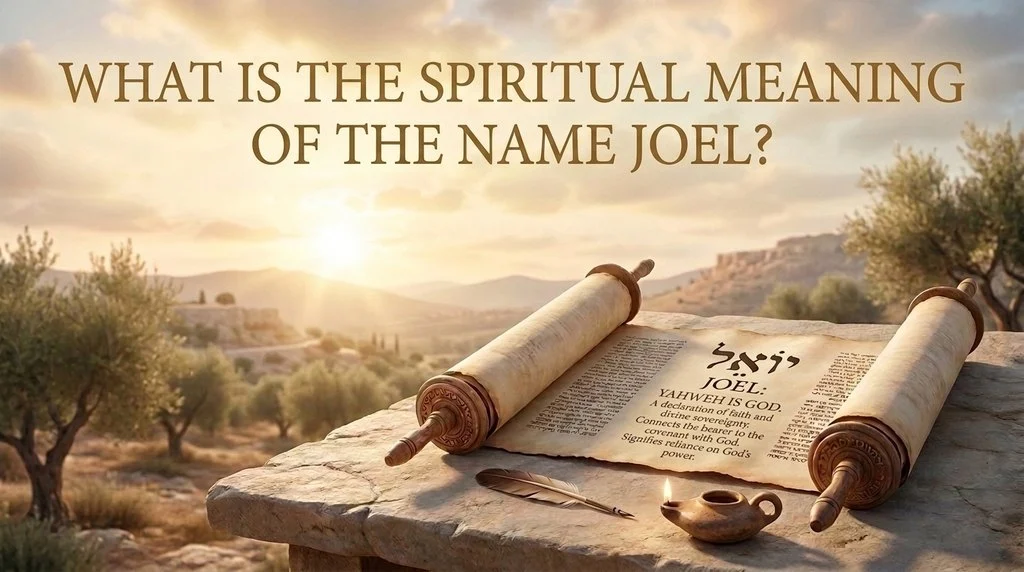
The spiritual meaning of Joel can be understood through its central confession:
The Lord is God.
That statement carries several important Christian lessons.
1. God Is the Center
The name Joel points attention away from self and toward God.
In a culture that often encourages people to build their identity around achievement, status, appearance, or popularity, Joel offers a different foundation.
God comes first.
2. God Remains God During Crisis
The Book of Joel begins during a devastating crisis.
The land has been stripped of its crops, and the people are suffering. Yet the crisis does not change who God is.
That is an important Christian truth.
Circumstances may change quickly. God’s identity does not.
3. God Calls People Back to Himself
Joel does not tell suffering people to simply endure their circumstances without reflection.
He calls them to seek God.
This does not mean that every hardship is a direct punishment for a specific personal sin. Christians should be careful not to make that claim without biblical support.
Instead, Joel shows that hardship can become an occasion for humility, prayer, repentance, and renewed dependence on God.
4. Restoration Belongs to God
Joel moves from devastation toward restoration.
The prophet’s message shows that God is not only the God who judges. He is also the God who restores, renews, and gives hope.
That theme is deeply consistent with the broader biblical story.
What Can Christians Learn From the Prophet Joel?

The prophet Joel offers several practical lessons for believers.
Turn Toward God in Difficult Seasons
When life becomes unstable, our first instinct may be panic.
Joel offers a better direction: seek God.
Prayer does not mean pretending the crisis is small. It means bringing the crisis before the One who is greater than it.
Take Repentance Seriously
Joel’s call to repentance is direct.
Christian repentance is more than saying, “I made a mistake.”
It means turning away from sin and turning toward God.
Do Not Build Theology on Every Hardship
Joel describes a particular national crisis in a particular biblical setting.
Christians should not automatically apply every detail as though it were a direct prophecy about their own circumstances.
For example, experiencing financial difficulty does not automatically mean that God is punishing someone.
Scripture calls Christians to discernment, prayer, wisdom, and humility.
Remember God’s Promises
Joel’s message does not end with devastation.
It moves toward restoration and God’s presence.
That is a valuable reminder when circumstances make the future look hopeless.
Joel Biblical Meaning vs. Popular Interpretations
It is helpful to distinguish what the Bible actually says from ideas people sometimes attach to biblical names.
| Claim | Biblical assessment |
|---|---|
| Joel means “the Lord is God” | Biblically supported |
| Joel is a Hebrew name | Biblically supported |
| Joel was an Old Testament prophet | Biblically supported |
| Joel’s book calls God’s people to repentance | Biblically supported |
| Joel speaks about God’s Spirit | Biblically supported |
| Every person named Joel has a prophetic calling | Not taught by Scripture |
| The name Joel guarantees spiritual success | Not taught by Scripture |
| Every hardship is God’s judgment | Not taught by Scripture |
| Joel’s exact historical date is certain | Not established by Scripture |
This distinction is important for trustworthy Christian teaching.
A biblical name can have a beautiful meaning without functioning as a prophecy about the person’s future personality or calling.
Does the Name Joel Have a Special Christian Meaning?
Yes, but it should be understood carefully.
The name itself means “the Lord is God.” That is already a deeply theological statement.
For Christians, the name can serve as a reminder of God’s authority, faithfulness, and identity.
However, the Bible does not say that people named Joel automatically receive a special spiritual gift, prophetic office, personality, or destiny.
The spiritual value of the name comes from what it declares about God, not from superstition about the person carrying it.
Is Joel a Good Biblical Name for a Baby?
Joel is a strong biblical name for a Christian child because its meaning directly points to God.
Why Christian Parents May Choose Joel
Parents may appreciate Joel because:
- It has clear biblical roots.
- Its meaning is easy to explain.
- It points directly to God’s identity.
- It is connected with an Old Testament prophet.
- It has strong New Testament significance through Peter’s use of Joel’s prophecy.
- It is familiar and easy to pronounce in English.
Most importantly, the name can become an opportunity to teach a child about the truth it represents.
Joel — “the Lord is God.”
That is a meaningful message for a lifetime.
What Does Joel Mean Spiritually for Christians Today?
The name Joel can be viewed as a simple reminder to place God at the center.
When life is comfortable, the Lord is God.
Life is painful, the Lord is God.
When prayers seem unanswered, the Lord is God.
Circumstances change, the Lord is God.
That does not mean Christians should deny grief, questions, or uncertainty. Biblical faith allows people to bring those realities honestly before God.
Joel’s message shows that faith includes both lament and hope.
Important Bible Verses Connected With Joel
| Passage | Main idea |
|---|---|
| Joel 1:1 | Introduces Joel and his prophetic message |
| Joel 1:14 | Calls the people to gather and seek God |
| Joel 1:15 | Announces the seriousness of the Day of the Lord |
| Joel 2:12–13 | Calls God’s people to return to Him |
| Joel 2:25 | Speaks of restoration after devastation |
| Joel 2:28–29 | Promises the outpouring of God’s Spirit |
| Joel 2:32 | Speaks of calling on the name of the Lord |
| Joel 3:14 | Again emphasizes the Day of the Lord |
| Acts 2:16–21 | Peter connects Joel’s prophecy with Pentecost |
The central message becomes especially clear when these passages are read together.
Joel moves from disaster to repentance, from repentance to restoration, and from restoration toward the greater promise of God’s Spirit and His ultimate intervention.
What the Bible Does Not Say About Joel
A responsible Christian explanation should also identify what Scripture does not say.
The Bible Does Not Say Every Joel Will Be a Prophet
The prophet Joel was specifically called to deliver God’s message.
That does not mean everyone who receives the name Joel has the same calling.
A biblical name is not a guarantee of a particular ministry.
The Bible Does Not Give a Personality Profile for Joel
You may find websites claiming that people named Joel are naturally wise, strong, gentle, ambitious, or prophetic.
Those descriptions may be cultural name associations, but they are not biblical teaching.
Scripture gives us the meaning of the name, not a complete personality chart for everyone who carries it.
The Bible Does Not Teach Name-Based Destiny
Christian faith is based on God, His Word, and His work—not on superstition surrounding a person’s name.
The name Joel can point someone toward God, but the name itself does not determine salvation, character, spiritual maturity, or future success.
FAQS:
What does Joel mean in the Bible?
Joel means “the Lord is God” or “Yahweh is God.” The Hebrew name is Yo’el. It is also the name of an Old Testament prophet whose book emphasizes repentance, the Day of the Lord, restoration, and the outpouring of God’s Spirit.
Is Joel a biblical name?
Yes. Joel is a Hebrew biblical name that appears several times in the Old Testament. Several different men are called Joel in Scripture, including the prophet Joel, the son of Pethuel.
What does the Hebrew name Joel mean?
The Hebrew name Yo’el means “Yahweh is God” or “the Lord is God.” It combines a form referring to Yahweh with El, the Hebrew term for God.
What is the spiritual meaning of Joel?
Spiritually, Joel can remind Christians of the foundational truth that the Lord is God. The Book of Joel also encourages repentance, prayer, trust in God’s mercy, hope for restoration, and dependence on God’s Spirit.
Who was Joel in the Bible?
The best-known Joel was a prophet and the son of Pethuel. He delivered a message concerning a devastating locust plague, called Judah to repentance, and proclaimed God’s future work. Scripture provides little additional biographical information about him.
What is the main message of the Book of Joel?
The Book of Joel emphasizes God’s sovereignty, repentance, the Day of the Lord, restoration, judgment, and the outpouring of God’s Spirit. A major movement in the book is from devastation and repentance toward restoration and hope.
What does Joel say about the Holy Spirit?
Joel 2:28–29 promises an outpouring of God’s Spirit on His people. Peter cites this passage in Acts 2 when explaining what happened at Pentecost, making Joel’s prophecy an important part of Christian understanding of the Spirit’s work.
Does Joel mean “God is willing”?
No. The standard biblical Hebrew meaning of Joel is “the Lord is God” or “Yahweh is God.” The meaning is centered on God’s identity rather than the idea that God is merely willing to act.
Is Joel a good Christian baby name?
Yes. Joel is a meaningful biblical name for a Christian child. Its meaning, “the Lord is God,” provides a clear reminder of faith in God. Parents should view the name as a meaningful statement of faith rather than as a prediction of their child’s personality or future.
What can Christians learn from Joel today?
Christians can learn to seek God during difficult seasons, take repentance seriously, trust God’s mercy, avoid making careless claims about suffering, and hold onto biblical hope. Joel ultimately directs attention away from circumstances and back toward God.
Final Thoughts:
The Joel biblical meaning is short, but its message is profound: the Lord is God.
That truth sits at the heart of the prophet Joel’s message. His book begins with devastation, moves through repentance and prayer, and ultimately points toward restoration, God’s Spirit, and His final authority.
For Christians, Joel is therefore more than an ancient Hebrew name. It can serve as a quiet reminder that God’s identity does not change when circumstances do.
The Lord is God—in times of abundance, in seasons of loss, and in moments when we need to return to Him.

I’m Chris Robert, a writer at NameFluxo who explores the deeper meanings behind biblical names, words, dreams, and spiritual symbols. I enjoy turning Bible-based insights into clear, simple, and meaningful articles that help readers understand their faith and Scripture better.