
Ever looked in the mirror and wondered what each of your teeth is actually called? Most people only know “front teeth” and “back teeth,” but your mouth is actually a highly organized system with specific teeth names, roles, and functions.
From biting apples to grinding food, every tooth has a purpose. And yes—your “fangs” actually have a proper dental name too (spoiler: they’re not called vampires officially 🧛♂️).
Understanding teeth names isn’t just for dentists. It helps with oral hygiene, dental care, and even confidence when talking about health issues. Whether you’re curious, studying, or just trying to impress someone at the dentist, this guide breaks it all down in the simplest way possible.
We’ll explore every tooth type, their names, positions, numbering systems, and even common problems. By the end, you’ll know your mouth better than your dentist explains in 30 seconds.
Let’s dive into the complete world of teeth names.
⚡ Featured Snippet Answer
Teeth names refer to the classification of human teeth into incisors, canines, premolars, and molars.
Adults typically have 32 permanent teeth, each with a specific function such as cutting, tearing, or grinding food. These names help dentists identify, treat, and maintain oral health effectively.
✅ Quick Tips Box
- Brush twice daily for all tooth types
- Use floss to clean between teeth
- Visit dentist every 6 months
- Avoid too much sugar for enamel protection
- Learn tooth names for better dental awareness
- Chew evenly on both sides of mouth
- Replace toothbrush every 3 months
🦷 Types of Teeth Names in Humans
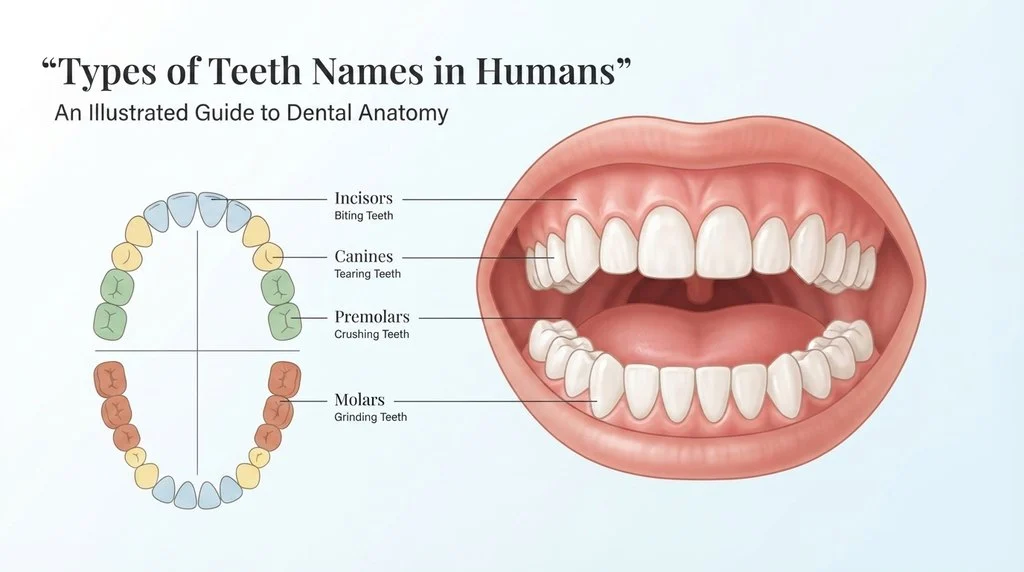
- Incisors – front cutting teeth
- Canines – sharp tearing teeth
- Premolars – grinding and crushing teeth
- Molars – heavy-duty chewing teeth
- Wisdom teeth – last erupting molars
- Upper teeth – maxillary arch set
- Lower teeth – mandibular arch set
- Permanent teeth – adult teeth set
- Primary teeth – baby teeth set
- Anterior teeth – front section teeth
- Posterior teeth – back section teeth
- Left side teeth – left dental quadrant
- Right side teeth – right dental quadrant
- Central teeth – middle incisors
- Lateral teeth – side incisors
👉 Why do humans have different types of teeth?
🦷 Incisors Teeth Names and Functions
- Central incisors – middle front teeth
- Lateral incisors – beside central incisors
- Upper incisors – top cutting teeth
- Lower incisors – bottom cutting teeth
- Sharp edge design – ideal for biting food
- First teeth visible when smiling
- Used for cutting fruits and vegetables
- Help in speech pronunciation clarity
- Thin flat shape for precision cutting
- Most prone to visible staining
- Important for facial aesthetics
- Four upper incisors in adults
- Four lower incisors in adults
- Primary biting force teeth
- Erupt first in childhood development
👉 Why are incisors the most important visible teeth?
🧛 Canines Teeth Names Explained
- Maxillary canines – upper sharp teeth
- Mandibular canines – lower sharp teeth
- Also called cuspids in dentistry
- Pointed shape for tearing food
- Strongest root among all teeth
- Located beside lateral incisors
- Help guide jaw alignment
- Play key role in biting force
- Only four canines in adult mouth
- Highly visible in smile structure
- Assist in chewing tough food
- Known as “eye teeth” informally
- Erupt after incisors in development
- Important for jaw stability
- Often misaligned without orthodontics
👉 Why are canines called the “cornerstones” of teeth?
🦷 Premolars Teeth Names Details
- First premolars – front grinding teeth
- Second premolars – back grinding teeth
- Located between canines and molars
- Used for crushing food particles
- Two roots in upper premolars
- Single root in lower premolars
- Eight premolars in adult mouth
- Transitional teeth between tearing and grinding
- Help distribute chewing pressure evenly
- Larger than incisors and canines
- Essential for food breakdown process
- Support facial structure stability
- Often removed in orthodontics cases
- Sensitive to cavities due to grooves
- Play key role in digestion
👉 How do premolars help in chewing efficiency?
🦷 Molars Teeth Names Breakdown
- First molars – earliest permanent molars
- Second molars – middle back teeth
- Third molars – wisdom teeth group
- Largest teeth in human mouth
- Designed for heavy grinding food
- Flat surface for crushing action
- Multiple roots for strong anchoring
- Found at back of mouth
- Six upper molars total
- Six lower molars total
- Key role in digestion process
- Most work-intensive teeth type
- Hard to clean properly
- High risk of decay
- Essential for chewing tough foods
👉 Why are molars considered the “power teeth”?
🦷 Wisdom Teeth Names and Issues
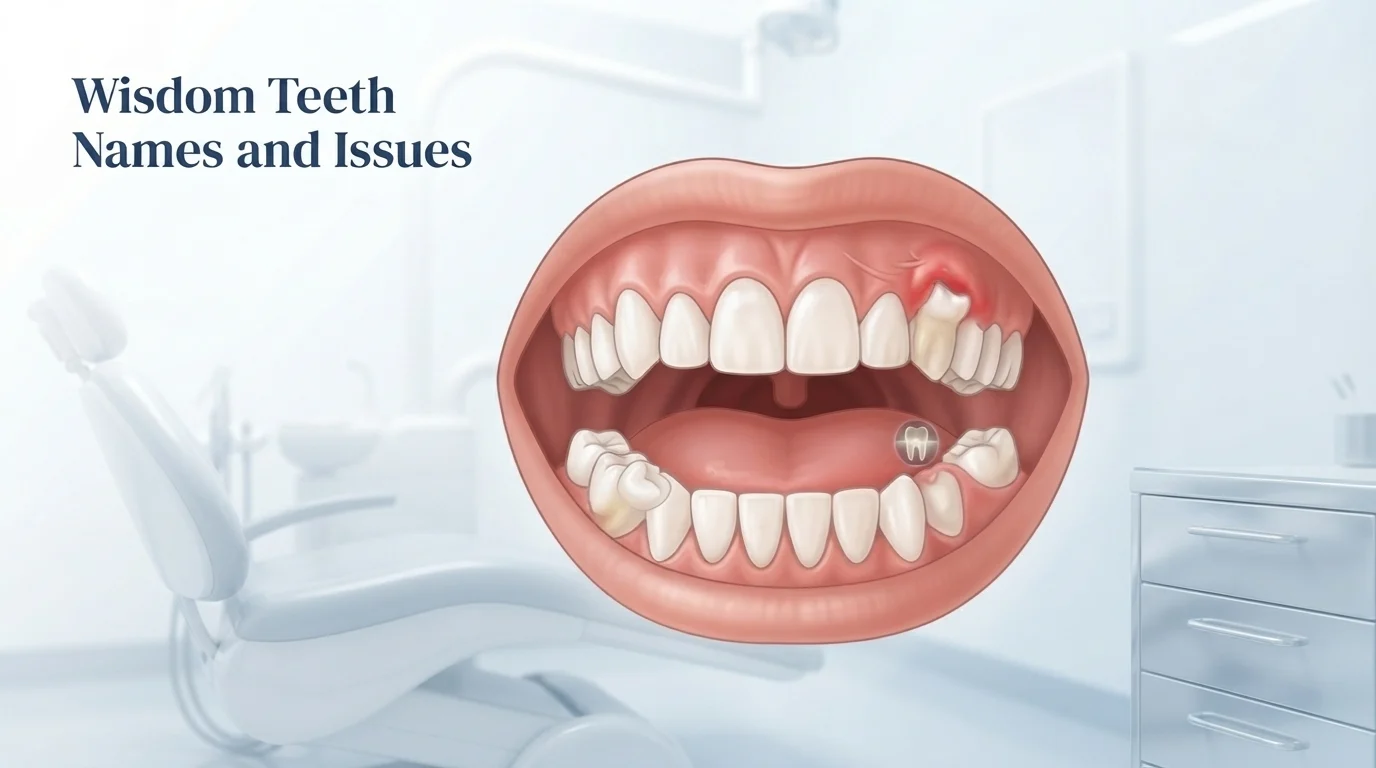
- Third molars – scientific name
- Erupt between ages 17–25
- Often cause overcrowding issues
- May remain impacted in jaw
- Located at very back
- Not everyone develops wisdom teeth
- Usually four wisdom teeth total
- Can cause pain during eruption
- Often removed surgically
- Hardest teeth to clean
- Can shift other teeth alignment
- Sometimes grow at angles
- Associated with gum inflammation
- Not always functionally necessary
- Evolutionary leftover structure
👉 Should wisdom teeth always be removed?
🦷 Primary Teeth Names (Baby Teeth)
- Central incisors – first baby teeth
- Lateral incisors – next front teeth
- Canines – sharp baby teeth
- First molars – early grinding teeth
- Second molars – last baby teeth
- Total 20 primary teeth
- Start appearing at 6 months
- Fall out by age 6–12
- Guide permanent teeth growth
- Smaller than adult teeth
- Whiter in appearance
- Easier to decay quickly
- Help in speech development
- Support jaw growth
- Temporary but essential set
👉 Why are baby teeth important for growth?
🦷 Permanent Teeth Names Chart
- Incisors – 8 total permanent
- Canines – 4 permanent teeth
- Premolars – 8 total teeth
- Molars – 12 total including wisdom
- Fully develop by age 13–21
- Stronger than primary teeth
- Designed for lifelong use
- Replace baby teeth gradually
- Support full chewing ability
- Maintain facial structure shape
- Important for digestion efficiency
- Require lifelong maintenance
- More prone to staining
- Can last lifetime with care
- Foundation of oral health
👉 How many permanent teeth should adults have?
🦷 Dental Numbering Systems Explained
- Universal numbering system – USA method
- FDI system – global dental coding
- Palmer notation – quadrant-based system
- Helps identify specific teeth quickly
- Used in dental records worldwide
- Reduces treatment confusion
- Assigns unique number per tooth
- Upper right starts numbering
- Lower left completes sequence
- Standard in orthodontic planning
- Important for dental X-rays
- Used in medical documentation
- Improves communication accuracy
- Essential for tooth extraction plans
- Helps track dental procedures
👉 Why do dentists use numbering systems?
🦷 Teeth Names by Position (Upper vs Lower)
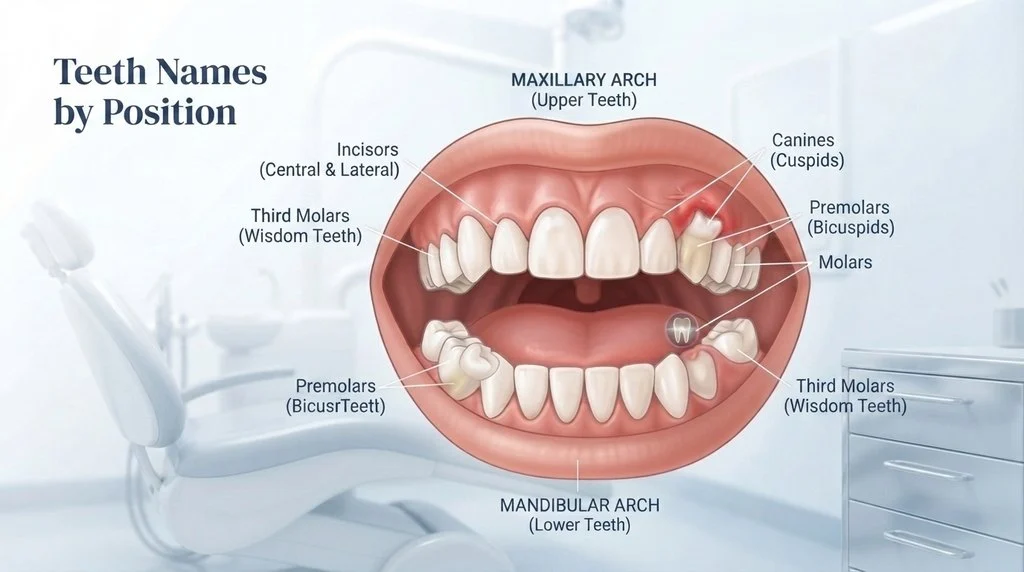
- Maxillary teeth – upper jaw set
- Mandibular teeth – lower jaw set
- Upper incisors – visible smile teeth
- Lower incisors – support biting function
- Upper molars – grinding upper foods
- Lower molars – chewing lower foods
- Symmetrical arrangement in mouth
- Left and right balance structure
- Upper arch more visible
- Lower arch supports jaw movement
- Both arches work together
- Bite alignment depends on position
- Misalignment causes dental issues
- Orthodontics focuses on positioning
- Crucial for chewing coordination
👉 How does tooth position affect your bite?
🦷 Common Dental Problems by Tooth Type
- Incisor cavities – front tooth decay
- Canine wear – sharp edge damage
- Premolar sensitivity – groove cavities
- Molar decay – hardest to clean areas
- Wisdom tooth pain – impaction issues
- Gum inflammation – around molars
- Tooth misalignment – crowding issues
- Enamel erosion – acidic damage
- Tooth fracture – biting hard foods
- Plaque buildup – all tooth types
- Tartar formation – untreated plaque
- Root infection – deep decay issues
- Tooth discoloration – staining problems
- Sensitivity pain – hot/cold triggers
- Tooth loss – severe dental neglect
👉 Which teeth are most prone to decay?
🦷 How Dentists Identify Teeth Names
- Use dental charts for mapping
- Examine mouth quadrant by quadrant
- Identify tooth type visually
- Check eruption patterns
- Use X-rays for hidden teeth
- Apply numbering system codes
- Compare upper and lower arches
- Assess tooth condition
- Record findings digitally
- Label each tooth precisely
- Diagnose based on structure
- Plan treatment accordingly
- Track changes over time
- Identify impacted teeth
- Ensure accurate treatment plans
👉 How do dentists keep track of all teeth?
🦷 Mistakes People Make About Teeth Names
- Thinking all teeth are the same
- Ignoring molar importance in chewing
- Confusing canine with incisor role
- Not understanding wisdom teeth purpose
- Skipping dental checkups regularly
- Misidentifying tooth pain location
- Ignoring baby teeth importance
- Using wrong brushing technique
- Overlooking back tooth cleaning
- Assuming numbering is universal
- Not flossing between teeth
- Delaying cavity treatment
- Ignoring sensitivity signs
- Misunderstanding tooth structure
- Thinking all teeth regenerate
👉 What common myths about teeth should you avoid?
🦷 Pro Strategies for Better Oral Health
- Brush with fluoride toothpaste daily
- Floss to remove hidden plaque
- Use mouthwash for bacteria control
- Eat calcium-rich foods regularly
- Avoid sugary drinks frequently
- Schedule dental cleaning twice yearly
- Replace toothbrush every 3 months
- Chew sugar-free gum occasionally
- Drink plenty of water daily
- Avoid smoking and tobacco use
- Use soft-bristle toothbrush
- Clean tongue for fresh breath
- Focus on back molar cleaning
- Treat cavities early
- Maintain consistent oral routine
👉 How can you protect all teeth types effectively?
❓ FAQs:
1. What are the main teeth names in humans?
Humans have incisors, canines, premolars, and molars. Each type performs a unique function like cutting, tearing, or grinding food. Together, they form a complete dental system that supports chewing, speech, and facial structure.
2. How many types of teeth names are there?
There are four main types: incisors, canines, premolars, and molars. These are further divided into upper, lower, left, and right positions, creating a structured system for dental identification and treatment.
3. What are wisdom teeth names called?
Wisdom teeth are called third molars. They usually appear between ages 17 and 25 and are located at the back of the mouth. They often cause crowding or pain in many individuals.
4. Why are teeth names important?
Teeth names help dentists identify, diagnose, and treat specific teeth accurately. They also help in dental records, communication, and understanding oral health conditions more clearly.
5. What are baby teeth names?
Baby teeth include central incisors, lateral incisors, canines, first molars, and second molars. There are 20 primary teeth in total that fall out as permanent teeth develop.
6. How do dentists number teeth?
Dentists use systems like Universal, FDI, and Palmer notation. These assign numbers or codes to each tooth for accurate identification and treatment planning.
7. Do all teeth have different names?
Yes, each tooth type and position has a specific name and function. This helps differentiate their role in chewing, biting, and maintaining jaw structure.
8. What are the strongest teeth in the mouth?
Molars are the strongest teeth. They handle the most pressure during chewing and are designed with multiple roots for stability and durability.
🏁 Conclusion:
Your teeth are more than just tools for eating—they are a perfectly designed system with unique names, roles, and responsibilities.
From incisors that cut food to molars that crush it, every tooth plays a vital role in your health and confidence.
Now that you understand teeth names, you can take better care of your oral hygiene and even impress others with your dental knowledge 😄🦷

I am Fabian Lee, the creator of Namefluxo, sharing simple, clear, and easy-to-understand content that helps users enjoy a smooth and friendly online experience.
1 thought on “263+ Powerful Teeth Names Guide 🦷✨Ultimate Breakdown”